How to Make a French House Track From Scratch in Ableton
Learn how to make a French house track from scratch in Ableton, start to finish, from 909 drums and a filtered disco loop to the filter sweep and a resonant bass.
French House is a loop genre. The whole thing tends to stand or fall on one filtered disco sample, a punchy drum groove and a bassline that sits just under it. This is a start to finish walkthrough in Ableton, building that classic sound from nothing. I use Logic myself, but more people use Ableton, so this one's in Ableton.
If you want the reference points, the 20 French House tracks you need to know list and the sampled sound breakdown cover the history. This is the practical version.
The blueprint
We're building one self contained loop:
- a disco loop, filtered
- a 909 style drum groove with swing
- a resonant bass locked to the loop
- a filter sweep doing the build
That's most of what French House ever was, so keep it simple and loop oriented.
The 909 backbone
French House drums are mid forward and punchy rather than boomy. For hits, I used VEH1 (Vengeance Essential House 1) for the kicks, claps and FX.
Load your picks into a Drum Rack. Leave headroom so the sidechain has room to pump.
Then the swing. Ableton's Groove Pool is where the laziness comes from. Load an MPC swing at around 50 to 60 percent and quantize the drums to 90 to 95 percent rather than 100. That tiny push is most of the feel.
For the main swingy hats I used the stock 909 drums from Ableton rather than a sample pack, and shortened the decay to 300ms so they stay tight.
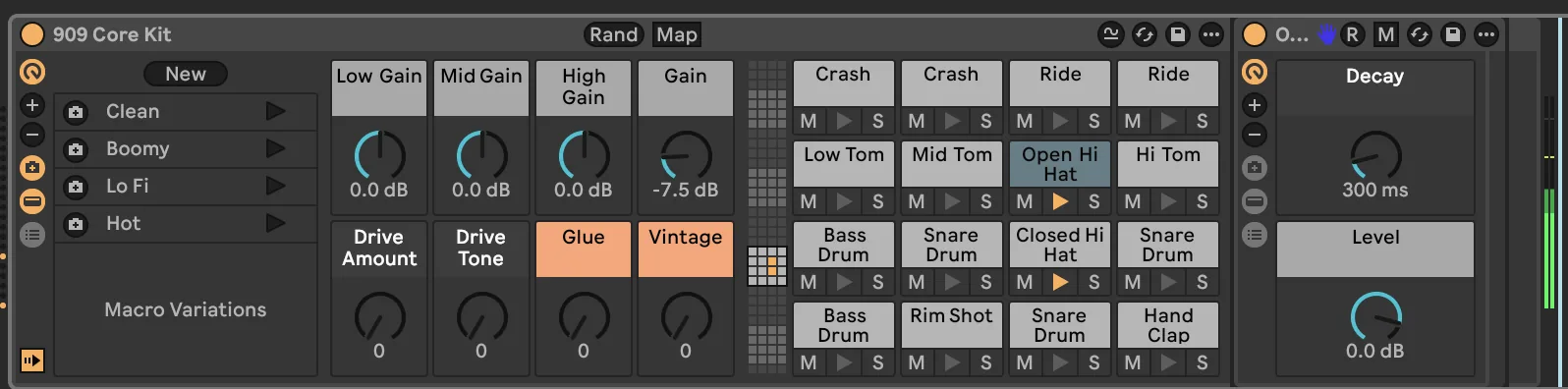
For extra percussion I also layered in a VEH1 house loop on top of the 909 groove.
The disco loop
Don't try to clear a real record yourself. Grab a pre cleared disco loop from Splice, which is royalty free and skips the whole clearance headache, or use Tracklib if you'd rather have original recordings.
Pick a 2 to 4 bar loop with space in it rather than a busy one. For this demo, I'm using a loop from the Discotheque Neon Glow pack on Splice.
I set the tempo to 126 BPM, but anything from 122 to 130 works well in this genre.
Warp it to your project BPM: Complex Pro gives a smooth, locked groove, while Beats mode is choppier and closer to how some original French house records feel. Either is valid, pick the vibe you want.
To handle the loop like a classic French House track, I dragged the sample into Simpler and chose to slice by beat with a 1/8 division. That lets me work it similar to how producers back in the day would work the MPC and the SP1200, chopping the disco record into playable slices rather than leaving it as one long loop.
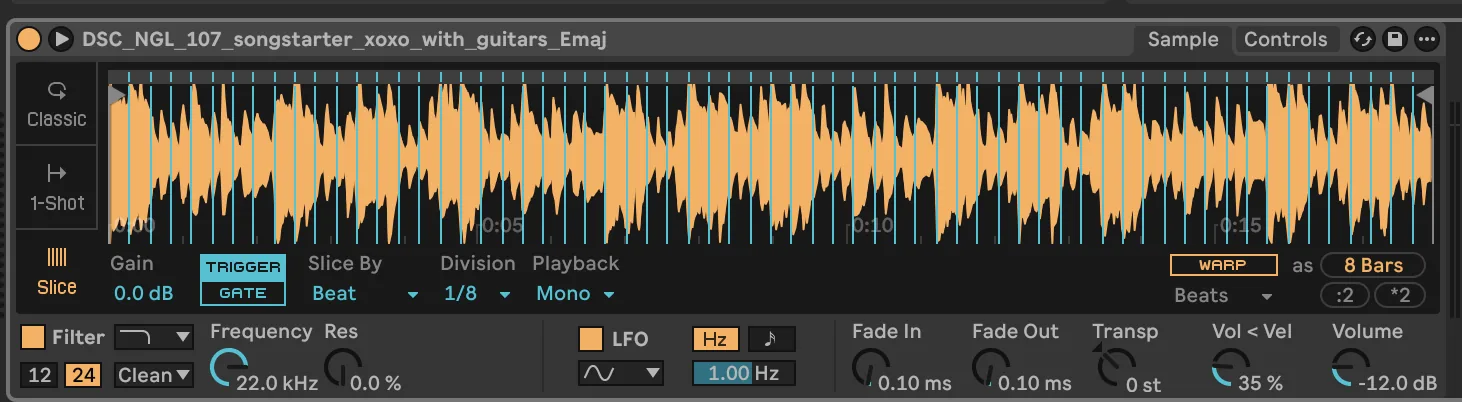
On these chops I added some swing, because I wanted a shuffly type of song rather than something locked straight.
The filter sweep
This is the French touch. Put an Auto Filter on the disco loop, set to low pass with a moderate resonance, and give it some envelope amount with a slow attack and release so the filter opens and closes across the phrase. Then automate the cutoff for the build: a low filter and a touch of resonance, opening up into the drop.
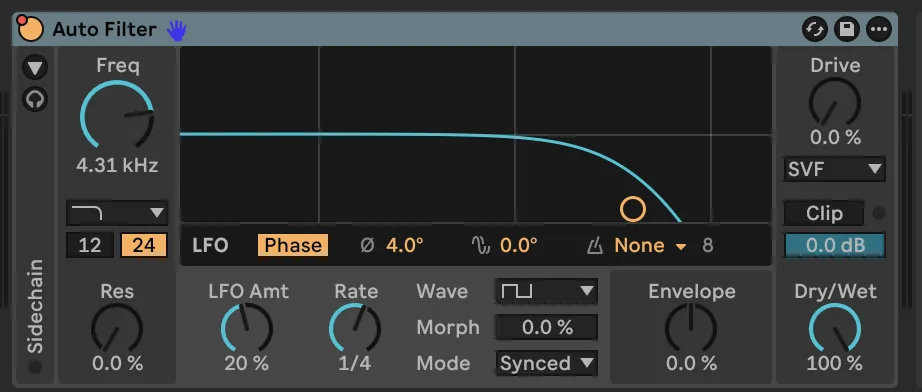
I brought the Auto Filter in on bar 17.
For extra movement I also wanted a deep, slow flanger on the loop. I used Ableton's stock Flanger and changed it to Four so the sweep is slower and wider, then made it slightly wider still and added some feedback so it moves more.
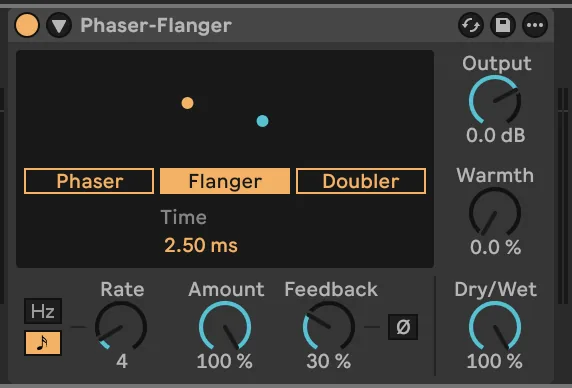
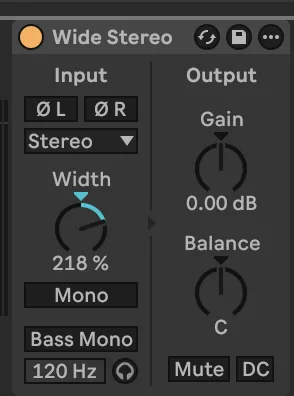
The FX are also from VEH1, and I added some 1/4 note delay to make them longer.
The bass
For the bass, use the Alavi bass preset, the TAL based Voyager patch, if you've got it. You can remake it with stock Ableton too: a saw from Operator or Analog into a low pass with a bit of resonance, locked to the root of the disco loop. Keep it subby but not muddy, and let it sit just under the sample.
The full recipe is in the Voyager bass breakdown if you want the exact movement.
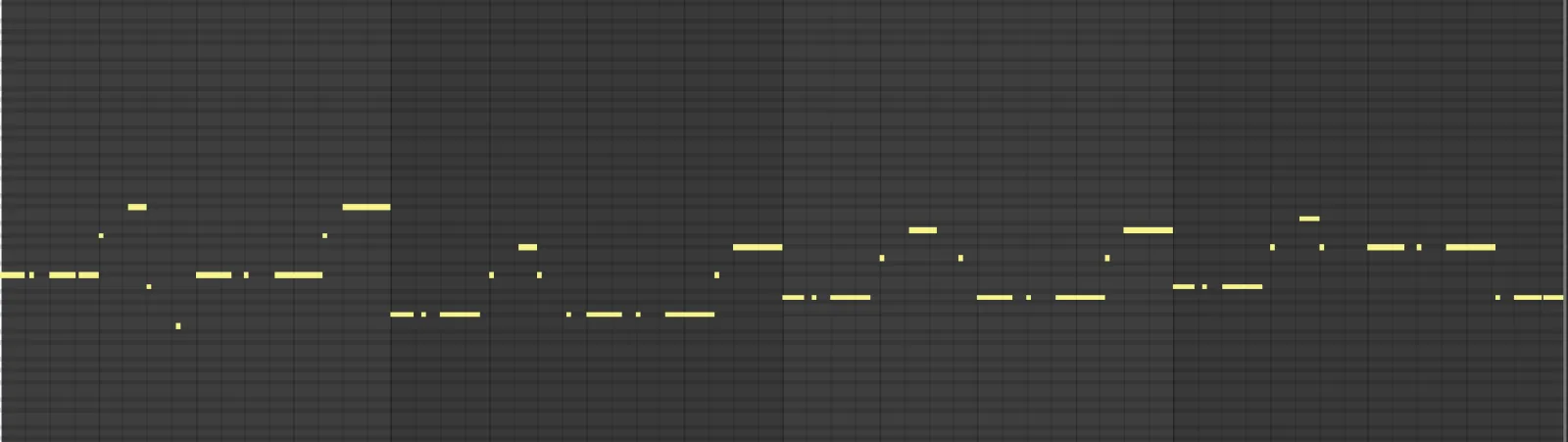
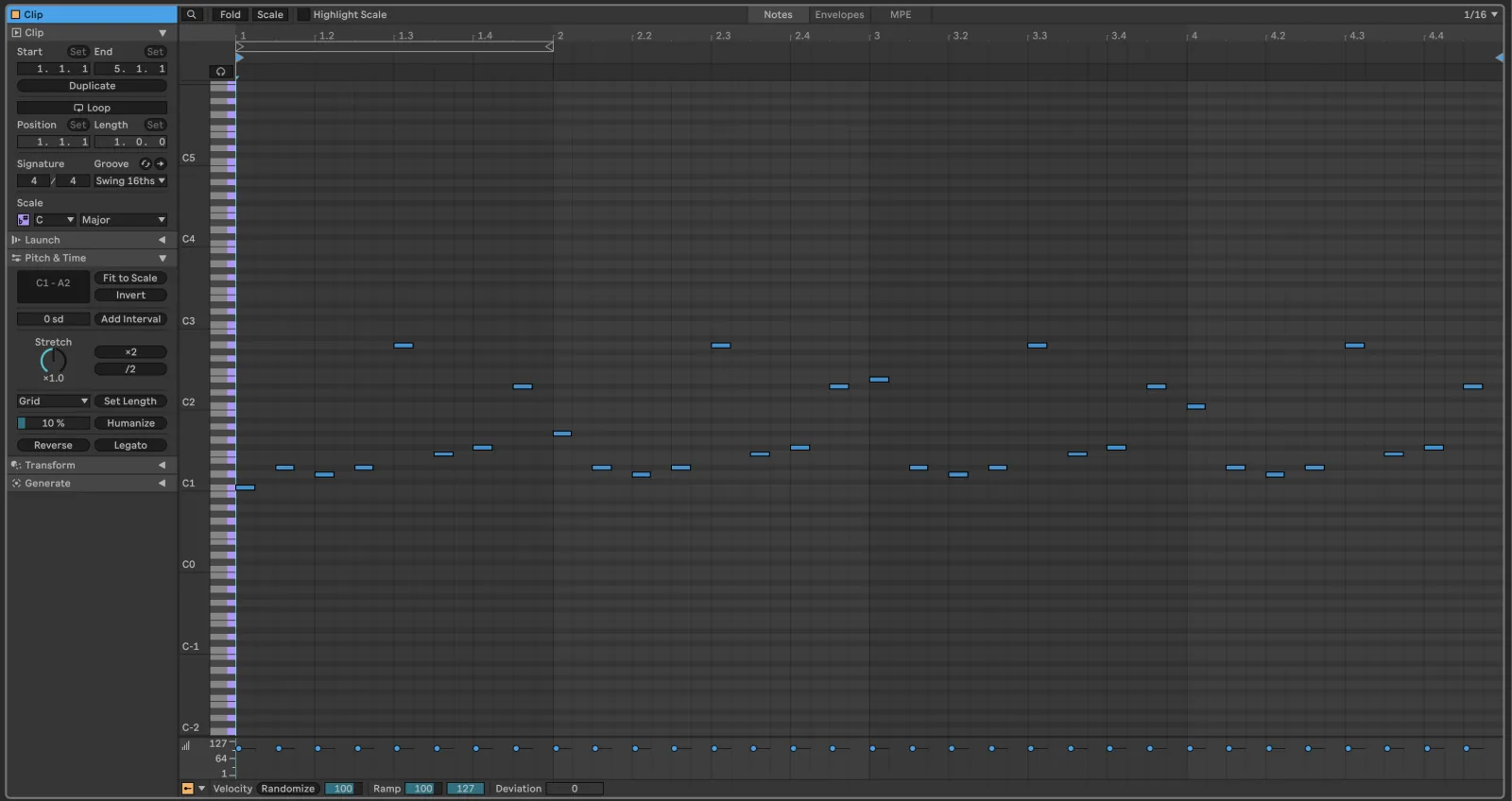
To mimic the sound of a real bassline I added a lot of short notes in between the main ones.
The chords
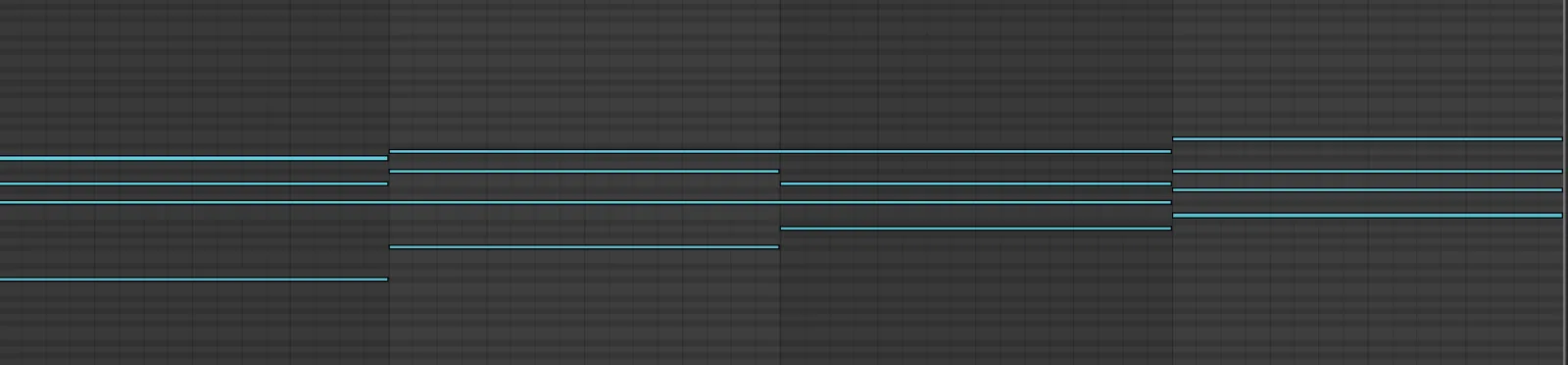
For the chords I started with the 80s VCO Brass preset and changed some of the settings.
Arrangement and groove
French House isn't a big arrangement, so don't overthink it. Build it loop first:
- intro with the filter swept down
- the full groove drops
- a short breakdown
- a filter sweep outro
Eight bars of perfect loop beats most overengineered tracks.
If you're making this for DJs or an extended mix, give it a long intro where you slowly build the elements up, but start with just the drums, and make sure you do something different with the sample along the way so people don't get bored. In this one I brought the Auto Filter in after a while to change it up.
I only made a short snippet of this song for this demo.
Mix
Carve with EQ Eight so the kick, bass and loop each have their own lane, and put a Glue Compressor on the drum bus to tighten the groove. That's enough, really; resist the urge to stack ten plugins on everything.
For the sidechain I grouped the sample, brass and bassline together and put Ableton's stock Compressor on that group.
I also cut the kick slightly to make room for the bassline.
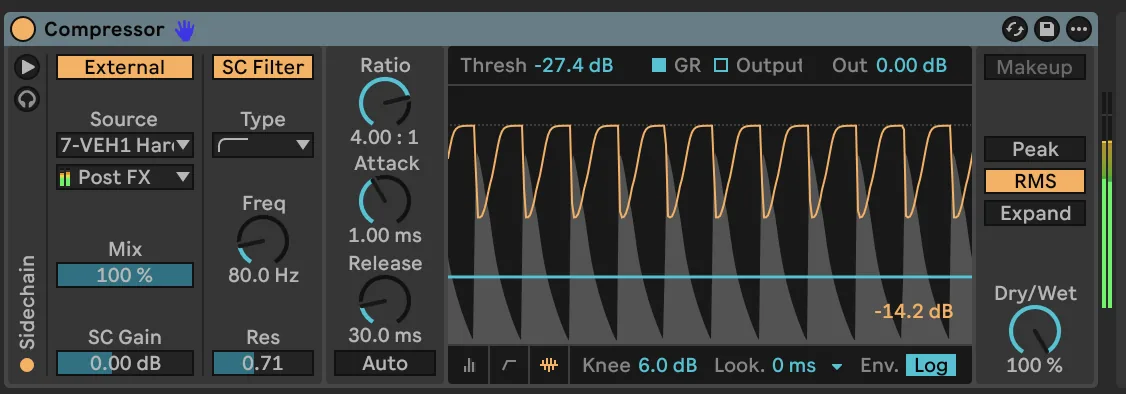
For the mix I kept things simple, using Ableton stock EQ and the tools already mentioned. For the master I used iZotope Ozone, but everything in there has an Ableton equivalent if you'd rather stay in the box.
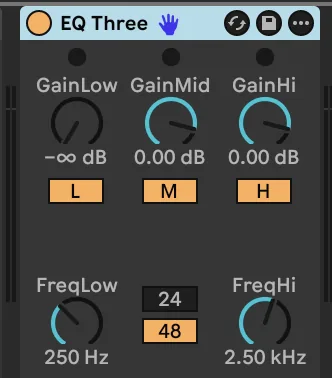
On the disco loop itself I cut out the lows with EQ Three, because I need some space in the low end for my own kick and bass.
Export and next steps
Bounce your loop, then build the rest of the track around it. From here, the 20 tracks list is a good place to hear how the greats used the same toolbox.
Frequently asked questions
What BPM is French house?
Most French house sits between 122 and 130 BPM, with 126 a common sweet spot.
What do I need to make French house?
A DAW such as Ableton, a drum kit or sample pack such as VEH1 for the hits, a disco loop from a cleared source such as Splice, and a low pass filter for the sweep.
How do you get the French house filter sound?
Put an auto filter set to low pass with moderate resonance on the loop and automate the cutoff so it opens and closes across the phrase.
Can I make French house in Ableton specifically?
Yes. This walkthrough is built entirely in Ableton using mostly stock plugins, with the Alavi or TAL bass preset as the only third party option.
Do I need to clear the disco sample?
Use a pre cleared loop from a service like Splice or Tracklib so you avoid the clearance work entirely.
What plugins do you need to make French house in Ableton?
Mostly stock plugins: Auto Filter for the sweep, Simpler for chopping the disco loop, EQ Eight and a Glue Compressor for the mix, and Operator or Analog for the bass. The only third party sound used here is the Alavi or TAL Voyager bass preset, which you can also rebuild with stock tools.
How do you make a French house bassline?
Run a saw wave through a low pass filter with a little resonance, locked to the root note of your disco loop, and keep it subby rather than muddy. Tucking short notes between the main hits makes it feel played instead of sequenced.
Comments